Friday, February 5, 2016

Pride and Prejudice and Zombies Review

The Bennett sisters
I have something of an odd relationship with Jane Austen. My wife is a huge fan of the film and TV adaptations of her novels, though I don't think she has read any of them. There was a period of several months where my wife watched the 1995 TV adaptation of Pride and Prejudice with Colin Firth as Mr. Darcey, every night as I was going to bed.  She played it over and over again night after night as I drifted in and out of sleep. 

My wife likes all of the adaptations of Austen's work, so I've seen all of them multiple times. The weird part is that I know mostly that 1995 Colin Firth TV version, but in weird disjointed half hour segments. As a result, all of the adaptations seem somewhat disjointed and have a dream-like quality for me and I have a lot of trouble keep one story straight from the next. So when I sat down to watch Pride and Prejudice and Zombies this morning, the first thing I asked myself was, is this the one with Mr. Darcey?  Fortunately, I got my answer fairly quickly. One of the first, lines of dialog in the film is, "Colonel Darcey."

I haven't read the novel, Pride and Prejudice and Zombies, though I have heard nothing but good things about it. I can't say whether it is a great adaptation or a hatchet job. I can only say that the movie really works. Having seen so many versions of Pride and Prejudice, Pride and Prejudice and Zombies seems to follow the story of the original work, just with the addition of a 19th Century zombie apocalypse. 


One the most haunting image in the film
For me, it worked on both levels, as a period movie and adaptation of Jane Austen, it was excellent. All or at least most of the social intrigue of the original is there. Then it also works as a zombie movie. The opening montage is sort of like a combination of a popup book and a magic lantern show, but it serves the purpose of giving enough information about the zombies, so you can jump right in and not feel lost.

I actually cried at the end when Mr. Darcey and... well, you know, or would know if you've ever seen or read it before. As a zombie movie, it's a lot of fun. It's two things that you could never imagine would go together but captures the spirit of both in the most incredible way.


Thursday, February 4, 2016

PowerPoint and Time Travel

If I had a time machine, I think would go back to about 1987, infiltrate Microsoft, and do my very best to prevent PowerPoint from being invented, in much the same way as the Terminator going back to prevent John Connor from being born. I think this would the world a much better place. 

To be honest, there is really nothing wrong with PowerPoint. If you have to train a group of people in a short amount of time and just want to cover the highlights, PowerPoint is the way to go. The problem is when you try to use it for something it is not intended, namely technical documentation. At my old company, we had thousands of technical documents in PowerPoint. 

The Subject Matter Experts (SMEs) assured us the customers liked it, but the truth of the matter is that the SMEs liked it. They liked to think in bullet points. What I discovered when I would sit in on customer training sessions with these PowerPoint decks was that much was lost in the translation. Often the SMEs would skip over certain slides and spend 10 minutes explaining the bullets on others. 

Looking at the material, we knew it was lacking and set out to get rid of PowerPoint or at least limit it to training sessions where someone would be going over the material in a classroom setting. If it wasn't intended for training, we would convert to them documents. Simple, right? Not if you care about your information. 

The simple approach to converting PowerPoint decks into documents is to take all of the section title slides and make those chapter headings. Then turn all of the slide titles into headings and all of the bullets into complete sentences and you're done, right? Well, yes. You will have something that looks like a real document. It will have chapters and section headings, and you can make a table of contents.

At a glance, it will look like a real document, but when you read it, it doesn't say very much. It has lots of little one-paragraph sections. If the section title slides were done well, at least. it's organized, but likely they weren't, and it's not. Well, what are you going to do? Hopefully, a whole lot better.

Your first and best option is to find your SME and have them give you the training like for a customer. Record it. Note any spots, where slides are skipped. Possibly these can be eliminated or at least severely edited. And those ten minutes that the SME spends on one slide, you now can transcribe and try to make sense of it. 

Of course, that may not be possible. SMEs are busy people. Besides, that's why they have technical writers, right? Well, yeah. That's why we make the big bucks. Whether or not, you have access to the SME, the real work is still ahead.

Save a copy of the original file, you might need to refer to it after you start. Avoid the temptation of turning all of the bullets into complete sentences. Some of them might really be bullets. Also don't make the section title slides in chapters just yet. It might send you down a bad road and make it harder to see the structure you're looking for. Your best bet is just read it as it is. Then read it again. You probably need to read it four or five times. Fortunately, with PowerPoint, it shouldn't take that long to read, even several times.

Eventually, the structure will emerge. You'll notice groups of slides that discuss the same topic. That's where your sections come from. Maybe you need to create new headings to encompass them. Those slide titles that at a glance look like headings will often turn into the topic sentences for paragraphs made out of bullets that fall under them. Now is the time to turn those bullets into sentences and figure out which ones really should still be bullets.

You might end up with a lot of sections and no chapters, but look at it again. Maybe the sections are just in the wrong order and moving them around will show you where the larger groupings should be. Maybe, looking at the original file and the section title slides will help. Keep going until you find chapters for your sections. What you end up with may not be perfect, but it will be way better than where you started. Going forward, you have something to build on.

And the time machine, well, it would probably make a lot more sense to bring back something of value that I could sell in 1987 and use the money to buy as much Microsoft stock as possible at 1987 prices. Then I could just retire and never have to worry about PowerPoint again. Maybe somewhere out there is a PowerPoint deck waiting to be turned into a something useful that will unlock the secrets of time travel. I can dream, can't I.

Wednesday, February 3, 2016

TCMFF Top 5

With yesterday's announcement from TCM, we now have a total of 13 films announced for the 2016 TCM Classic Film Festival (TCMFF), April 28-May 1 in Hollywood. At this point, I thought I should do my top 5 picks of what's been announced so far. I did this last year as well, but kept revising it as more and more films were announced. I promise I won't be as bad this year.

No. 5. The King and I (1956). Me, I'm not a musical fan. That said, there are about a dozen of them that I really love. The King and I falls pretty high on that list.

No. 4. Horse Feathers (1932). The Marx Brothers on the big screen at TCMFF. Do I need to say more?

No. 3. Trapeze (1956). It seem like one time every year at TCMFF, there is one screening I go to because of the celebrity announcing it. Trapeze with Gina Lollobrigida introducing the film, that will probably be it. Maybe, I just have a thing for hot Italian, women.... In their 80s. You have no right to judge me.

No. 2. The Kid (1921). I love Charlie Chaplin, and a new restoration of The Kid, that's gotta be a must see. At least, until the full schedule drops and all of this speculation goes out the window.

No. 1. The Endless Summer (1966). If you were only to see one movie about surfing your whole life, Bruce Brown's The Endless Summer should be it. Getting to see it on the big screen with Bruce Brown introducing is gonna be a treat. Brown's low key narration provides humor and turns this from a great collection of surf footage into an adventure story about a couple of young surfers sharing their love of surfing with the world. Brown said that early on, everyone told him that the film would never play 50 miles from the ocean. To prove them wrong, he took the film to Witchita, Kansas, where lined up in the snow and sold out shows for weeks.

Tuesday, February 2, 2016

TCMFF Updates Drop

Today, an announcement was made for new films and guests for the 2016 TCM Classic Film Festival (TCMFF), April 28-May 1 in Hollywood. The big news is that Gina Lollobrigida will be in attendance and will appear before screenings of her films, Trapeze (1956) and Buona Sera, Mrs. Campbell (1968). In addition, filmmaker Bruce Brown will be on hand for a screening of his 1966, classic surfing documentary, The Endless Summer. Also announced today is the appearance of Oscar winner Marlee Matlin for the 30th Anniversary of Children Of A Lesser God and a special live event Voices Of Light: The Passion of Joan of Arc (1928), featuring a live orchestra and chorus performance of original score by Richard Einhorn with conductor Dr. Mark Sumner.

New films announced today include:

  • Buona Sera, Mrs. Campbell (1968) 
  • Children Of A Lesser God (1986)
  • The Endless Summer (1966)
  • The Keys Of The Kingdom (1944)
  • The Kid (1921)
  • The Passion of Joan of Arc (1928)
  • The Song Of Bernadette (1943)
  • Trapeze (1956)


Previously announced films:

  • Horse Feathers (1932)
  • It's a Wonderful Life (1946)
  • The King and I (1956)
  • Shanghai Express (1932)
  • A Tree Grows in Brooklyn (1945)


At this point, we should be seeing announcements like this more frequently until the full schedule drops about three weeks out from the Festival. See the full announcement here.

Sunday, January 31, 2016

µ-Blog – Shortcut at Ikea

µ-Blog – Too long to tweet, too short to call a real post

I went to Ikea today. I made the mistake of taking a shortcut and not following the little arrows they have on the floor. I ended up having to hire a clerk named Sven on loan from the home office to show me how to get to the front. It took the better part of the afternoon. It turns out that Sven was a woman, but I'm convinced that she could take the Rock in a cage fight. I did end up getting a really cool set of five tea light holders for only $3, so there is that.

Tuesday, January 26, 2016

Announcement: The Blogathon From Another World, April 9–10, 2016

It's on. The Blogathon From Another World has started. To see the posts, go to:
http://chrissturhann.blogspot.com/2016/04/the-blogathon-from-another-world-hits.html


In honor of two Sci-Fi movie milestones in April, Blog of the Darned will be hosting The Blogathon From Another World, April 9–10, 2016:


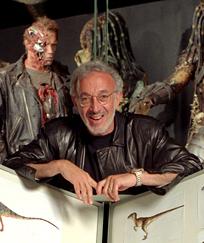
  • April 7 would have been the 70th birthday of science fiction special effects makeup artist, Stan Winston. Winston died in 2008 of multiple myeloma, a blood cancer. Stan Winston did landmark effects in the John Carpenter's The Thing, The Terminator (and Terminator 2: Judgment Day), Aliens, Predator, Jurassic Park, and many more.
  • April 6, marks the 65th anniversary of the 1951 Christian Nyby/Howard Hawks classic, The Thing From Another World.
    [Updated April 6, 2016: I'm not sure what happened here. It turns out the release date for The Thing From Another World is actually April 27, 1951, not April 6. Both IMDB and Wikipedia agree on that date. I'm not sure where I got April 6, I'm pretty sure I didn't pull it out of my butt. Possibly, the date was updated since I posted this or I got it from a different source. Anyway, apologies.]

In the context of The Blogathon From Another World, the broadest possible definition is applied. Films can be of any era from Georges Méliès A Trip to Moon to Star Wars: The Force Awakens. The only restriction is that it must be a theatrical film, not television, i.e., Star Trek II: The Wrath of Khan is fine, Star Trek, the original TV series, not so much. Beyond that, just about anything is fair game, Godzilla (radioactive monster), Spider-Man (radioactive spider), or Kiss Me Deadly (radioactive beach house). Okay, so maybe the last one wasn't the best example, but I bet if you turned on Kiss Me Deadly during the two minutes you might think it's a Sci-Fi film.


Since most of my film cronies lean toward classic film, I encourage participants to step outside of their comfort zones. Obviously the 1950s was great time for science fiction, but so were the 1970s, 1980s, and 1990s. Some ideas just to get you started:


  • A comparison of a classic sci-fi film and its modern remake, like the 1953 War of the Worlds with the Spielberg version. 
  • A look at several Sci-Fi films by the same actor, director, or effects artist. For example, two of my all-time top five science fiction films star the same actor, and no, it's not Harrison Ford. 
  • A review of a great underrated Sci-Fi film, like They Live or Miyazaki's, Nausicaä of the Valley of the Wind.
  • Sci-Fi films where the sequel is better than the original, or where the sequel is so bad it kills the franchise
Lineup so far
  • 301 Words – Baseball writer Geoff Young steps out of the batter's box and looks at Serenity (2005)
  • Blog of the Darned – That would be me. I'll be doing The Evolution of Movie Robots: Metropolis to Chappie 
  • BNoirDetour! – BNoirDetour looks at Dark City (1998)
  • Christy's Inkwells – Christy looks at Mysterious Island (1961)
  • CineMaven's ESSAYS from the COUCH – CineMavens brings us a Mara Corday Triple Feature, briefly covering three sci-fi classics from the 50's: The Black Scorpion (1957), Tarantula (1957), and The Giant Claw (1957).
  • F for Films – Josh Wilson looks at Tron (1982)
  • Film Perspective – Elise Sitzman tackles Contact (1997)
  • Horrible Imaginings Film Fest & Podcast – My San Diego homeboy Miguel Rodriguez and I will be doing a podcast on Frau im Mond (1929). Great suggestion, Miguel. This has been on my bucket list for a while.
  • In The Good Old Days Of Classic Hollywood – Crystal takes on Spielberg's 1982 classic, E.T. the Extra-Terrestrial
  • Movie Movie Blog Blog – Steve Bailey looks at Spiderman 2 (2004), a film where the sequel surpasses the original
  • Serendipitous Anachronisms – Summer Reeves looks at the anime classic Akira (1988)
  • Speakeasy – Kristina looks at The Valley of Gwangi (1969)

Please use the #BlogathonFromAnotherWorld when promoting the blogathon. I also created the following graphics. Please feel to use any of them or the one at the top to promote/use on blogathon posts. More to come later.


I created this with the Star Wars Crawl Creator;
you can see the full crawl here
[Need to click, BEGIN to see it run] 


If you are interested, please post a comment indicating your planned topic. Or feel free to contact me using the email link by clicking my name under About Me.

Thank you

Friday, January 22, 2016

Star–Director Blogathon: Billy Wilder and William Holden, a Match Made in— Well, Probably Not Heaven

This post is part of the CLASSIC SYMBIOTIC COLLABORATIONS: The Star–Director Blogathon


If you had asked me 20 years ago who my favorite director was, I would have said, Alfred Hitchcock without batting an eye. If you asked me now, I still might say, Alfred Hitchcock, but I'd really have to agonize over it. Now, if this post is supposed to be about Billy Wilder, why am I talking about Alfred Hitchcock?

Well, I love Alfred Hitchcock, but he is kind of a one trick pony. It's a really really good trick, and nobody else can do that trick as well as he could. Likely, no one ever will. The reason I now have to agonize over my favorite director is that Billy Wilder could do it all, and nowhere is that more evident than his collaboration with William Holden. In the early to mid-1950s, the pair made three films together, and they about as far apart from each other as films could possibly be:

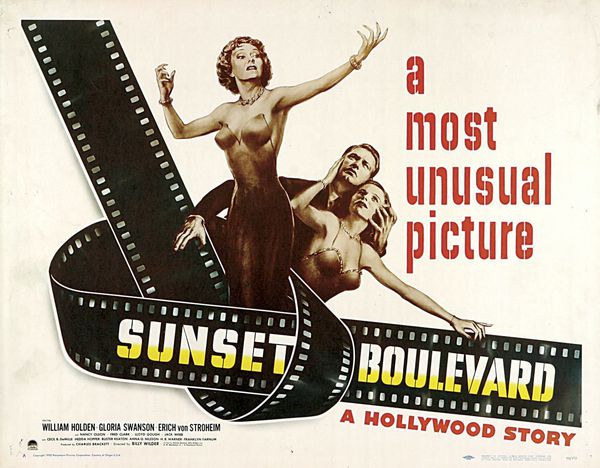
  • Sunset Blvd. (1950)
  • Stalag 17 (1953)
  • Sabrina (1954)
Two decades later, they teamed up again for, Fedora. The parallels between Sunset Blvd. and Fedora are obvious. If you haven't seen Fedora, it's not about a private eye. That's what the title suggested to me. It's about a movie star, Fedora, who retired and has been living in seclusion in Europe. Obviously, Fedora is two film greats way past their prime trying to recapture their glory days with a rehash of arguably their greatest film together. Or is it? I mean isn't William Holden's character basically the same person as in Sunset Blvd.

Well, except for that whole face-down-in-the-pool thing. Ooh, spoilers. Sorry. I'm going to assume that everyone has seen the first three films and not the last one. Probably, a fairly safe bet. With the exception of the face-down-in-the-pool comment above, I tend to avoid spoilers whenever possible. On Billy Wilder-William Holden pairings from the 1950s, there may be some minor spoilers. On Fedora, I'll do my best to have none.

Let's look at these films separately.

Sunset Blvd.


Like many of Billy Wilder's films, Sunset Blvd. is a bit hard to classify. IMDB calls it both Drama and Film Noir while Wikipedia refers to if as Black Comedy/Drama and Film Noir.  I think all of these work. Most of the comedy in the film stems from Norma Desmond (Gloria Swanson) saying very funny things that she doesn't realize are funny, or William Holden editorializing about the things she says or does. You feel like you are a bad person for laughing. So, yeah, Black Comedy works. At its heart, Sunset Blvd. is essentially a Tragedy. William Shakespeare couldn't have done better. So, Drama works as well. Film Noir, hmmm. Well, it doesn't have any hard-boiled private eyes. No back alleys or dark nightclubs, but where does most of the movie take place. A Beverly Hills mansion totally gone to seed. An architectural tribute to a bygone era. A mausoleum. How does the Holden voiceover describe the place. 

"The whole place seemed to have been stricken with a kind of creeping paralysis— Out of beat with the rest of the world, crumbling apart in slow motion."  

Sounds a bit Film Noir to me.  Oh yeah, then there's William Holden face down in the— Oops.

And what of the star? William Holden is a down-on-his-luck screenwriter. A former newspaper man who had come to Hollywood to write movies. With only a couple of B-pictures to his credit, he grinds out original stories, two a week, only to not have them sell. He's just an ordinary guy, trying make it in a very rough business. He's trying to avoid having to go back to his old job at the city desk of a Midwestern newspaper and admit to himself that he couldn't make it.

Leave it to Billy Wilder to take Film Noir, a genre that had barely been defined, and turn it on its ear. Look at the characters:

  • Joe Gillis (Holden), his only crime is wanting to make a living writing movies, unless you count missing a few car payments and trying to keep it from being repossessed
  • Norma Desmond (Swanson), delusional, unwilling to accept that the world has moved on
  • Max (Erich von Stroheim), out of love for Norma, he writes her fan mail, so that she can keep her illusions alive
  • Betty Schaefer (Nancy Olson), I like to think of her as an unjaded version of William Holden, before the Hollywood machine had beaten him. Of all the central characters, she's the one that comes through with the least scars. She only has to deal with losing William Holden and likely end up being married to Jack Webb.
None of them are bad people, they're all just twisted by forces beyond their control. If that's not Film Noir, I have no idea what is. There's a certain poetry to Sunset Blvd. from the first frame to the last. It's a masterpiece.

For the part of Joe Gillis, Marlon Brando, Fred MacMurray, and Montgomery Clift were also considered. Clift even signed to play the role and withdrew, claiming it was too close to the role he played in The Heiress. I think it might have worked with any of them. Fred MacMurray was possibly a bit old, only about 10 years younger than Swanson. I really think the age difference is a factor. Brando would have been mid-twenties, possibly a bit young. Montgomery Clift was only a couple of years younger than Holden, but I'm thinking he would have looked younger than Brando. Also, I always got an innocence and vulnerability from Clift. Joe Gillis is world weary and cynical. William Holden could do cynical like no one's business. I just don't see anyone being better in the role than William Holden. It was a signature role for him and his first nomination for an Academy Award.

Stalag 17

Here we have Billy Wilder's take on a War drama, but is about patriotism, comradery, or courage under fire? No, it's about greed and suspicion and betrayal. In a German prison of war camp, the men in a certain barracks always find that the Germans are one step ahead of them and suspect an informer in their midst. Suspicion falls on William Holden's character, Sgt. Sefton, because he always has some scheme going, selling cigarettes and holding gambling events, and using the profits to buy better food and treatment from the German guards. Like most Wilder films, it's a great story with a great cast of characters in roles both large and small, all executed with absolute precision. 

Stalag 17 was shot in sequence, in the same order as the final film. A rarity because it generally takes longer and is more expensive. Many of the actors didn't know about the final plot twist until they were about to shoot it. A former POW, William LaChasse, was hired in a bit part, and the production based much of the look of the camp on his recollections. Holden donned a crewcut and often went unshaven to downplay his looks and add to the gritty reality of the film.

Once again, William Holden was not the first choice for the role. Originally, Charlton Heston was considered. Then, Kirk Douglas was offered the role and turned it down, later saying it was the biggest mistake of his career. William Holden didn't want the part either. The film is based on a stage play. Holden walked out during the first act and later had to be coaxed into reading the screenplay. Still, he refused the role, but the studio bullied him into doing it. During production, William Holden was constantly trying to get Billy Wilder to make changes to the script to make his character more sympathetic. Wilder refused. 

The thing I love about William Holden is that he always have some sort of angle, making him perfect for that role of Sgt. Sefton, who knows all the angles. I really can't imagine anyone else in the role. Definitely, the character is unsympathetic, but Holden's natural charm keeps you on his side. And what did William Holden get out of it, only an oscar for Best Actor, beating out Burt Lancaster and Montgomery Clift in From Here to Eternity.


Sabrina


Sabrina with David (and William Holden)
Sabrina might be the weakest of the films being considered. Why? Because it's just a light comedy. It's fluff and doesn't have the edge that you'd expect out of a Billy Wilder comedy. Yet, the remake 40 years later had only a few minor tweaks to update it and works great. It's cute. It's funny. What more do you want from a comedy? There's a theme about differences in class, but nothing heavy handed. Originally, Cary Grant was cast to play the older Larrabee brother, Linus, and Humphrey Bogart was brought in as a last minute replacement. Personally, I think it works better with Bogart. I think it would be too easy for Audrey Hepburn to fall in love with Cary Grant. Having Bogart get the girl makes the story that much more touching for me.

I'm sure the role of the younger playboy brother, David, was not very demanding for William Holden. Then again, I can't imagine the roles being very demanding for anyone in the cast. When released several critics said they thought Holden would have been better playing Linus and a younger actor playing David. Again, I think you would have the same problem as with Cary Grant. Why wouldn't Audrey Hepburn fall in William Holden as the older brother. As it was, the casting was perfect. William Holden's charm and easy good looks are the perfect counterpoint to Bogart's craggy awkwardness. Only Billy Wilder could have Humphrey Bogart get the girl over William Holden and make it work.

Much of what you see online about the film involves Audrey Hepburn's clothes. I don't think that Sabrina was much more than a blip on the radar for either Billy Wilder or William Holden, but what a wonderful blip. If this is one of their lesser films for both Wilder and Holden, I only wish they had made 10 more each that were just as good.

Fedora


Fedora couldn't be more of a perfect bookend to the Billy Wilder-William Holden relationship if it tried. I hadn't seen it until about a week ago. I've been working my way through the later Billy Wilder films for the last couple of months. I'm only missing a couple of them (Avanti and Buddy Buddy). I have to say it's easily my favorite of the later Billy Wilder films. 

William Holden plays Dutch Detweiler, a down-on-his-luck film producer, trying to coax classic film star, Fedora, out of retirement. When Holden finds her living in seclusion on a small island in Greece, something is wrong. Fedora appears to be being held prisoner by her doctor (José Ferrer) and her benefactor, the Countess Sobryanski (Hildegard Knef). I honestly don't think I can go into much more detail on the plot without spoiling things. 

Fedora only saw limited release, prompting Billy Wilder to complain that the studio spent about $625 on marketing. Admittedly, Fedora is not a perfect film. I have a feeling that 1970s audiences found the voice-overs and flashback within a flashback structure old-fashioned and offputting. I was fine with it, but then again I watch a lot of old movies. My biggest problem was that it seem overly melodramatic. Billy Wilder had wanted Marlene Dietrich to play the role of Fedora, and Faye Dunaway as her daughter Antonia. I think that stronger casting of the female characters might have turned this flawed but interesting film into a truly great film. That wasn't meant to be. Dietrich apparently hated the book and thought the screenplay did little to improve it. It's not clear to me whether Faye Dunaway was seriously considered beyond Billy Wilder wanting her.

For William Holden, it was a good solid performance. Maybe not Network, but still.... So is Fedora a couple of has-beens clutching at straws? No, not really. Sure, no one is ever going to say it's a better film than Sunset Blvd., but it does have something to say Hollywood and the cost of fame. And that something is not the same thing that Sunset Blvd. says. In fact, it deals with something that Sunset Blvd. only hints at, the double standard in Hollywood with regard to male and female actors. Male actors are allowed to age gracefully. Female actors, not so much.

Thanks to Billy Wilder's skill, you buy Humphrey Bogart in Sabrina getting a girl far too young for him over the more or less age-appropriate and better looking. William Holden. Theresa Wright and Ida Lupino were both born the same year as William Holden. The year that Holden was nominated for Best Actor in Network. Theresa Wright did a made-for-TV called Flood, and appeared in a TV series called The Wide World of Mystery, in an episode titled "Terror in the Night." That same year, Ida Lupino made a film called Food of the Gods (about giant wasps). The fictitious Fedora, she did what many older actresses do when they don't want to co-star opposite giant insects. She tries to fade into the background and let her public remember her as she was. If you haven't seen Fedora, hint, it doesn't work out for her. 

Check out other posts in the CLASSIC SYMBIOTIC COLLABORATIONS: The Star–Director Blogathon