Showing posts with label Actors. Show all posts

Sunday, December 31, 2017

The Bill and Myrna New Year's Blogathon - Another Thin Man

This post is an entry in The Bill & Myrna New Year's Blogathon hosted by Phyllis Loves Classic Movies and The Flapper Dame


In my opinion, The Thin Man is kind of an odd duck as movie series go. They often follow the pattern of, first movie's good; second movie sucks; third movie's good; and fourth movie sucks so bad it kills the franchise. I joke, but I could give you examples. Lots of them. The Thin Man series is unique in that all of the films are good and never lose their edge.

If I had to pick my least favorite, it would have to be, The Thin Man Goes Home. It's not a bad film, but in the film, Nick and Nora visit Nick's father, a conservative doctor in a small town, who objects to Nick's drinking. As a result, Nick switches to cider. Don't get me wrong, it's still a good movie, but Nick and Nora being sober just doesn't work for me like the others.


If I had to pick my favorite, simple, Another Thin Man, the third film in the series, mostly because of the cast. It has the best cast of any of the series, and yes, I am taking into account that Maureen O'Sullivan being in the first movie and James Stewart in the second.  Also, there is the nightclub scene, which really has to be the best single scene in any of the Thin Man movies. Finally, it is the last film to have the full creative team of William Powell/Myrna Loy, of course, director Woody Van Dyke,the husband/wife screenwriting team of Frances Goodrich and Albert Hackett, and an original story by Dashiell Hammett.


I think the key element in the creative team is probably Goodrich and Hackett, who wrote the screenplays for the first three Thin Man films as well as It's a Wonderful Life, Father of the Bride, and Father's Little Dividend.  Not that the last three films suffered from their absence, but they set the groundwork for what was to come. According to Wikipedia on the first film, Van Dyke encouraged them to use Hammett novel for the plot structure but to concentrate of providing witty banter between Nick and Nora, and that was a formula that just worked. 


*******************************************************

**** The following text contains mild Spoilers ****
*******************************************************

My  second reason for picking Another Thin Man as my favorite in the series, is the nightclub scene. Nick in typical style ditches Nora to follow up on a lead that ultimately brings him to the West Indies Club. Meanwhile, Nora gets a phone call which leads her to the same nightclub. The scene opens with Nick arriving. The maître d' recognizes Nick and seats him with a bevvy of hot Latino women, who faun all over him, order drinks, food, a steal his cigarettes. 


The scene switches to nightclub entertainers René y Estela credited as Renee and Stella, who headlined a show at New York's Havana-Madrid Club in real life. It is one of the coolest dance routines I've seen in any movie:


After the performance, a waiter hands Nick a note signed with the name of one of Nick's old flames. He asks the waiter who gave him the note. Nick is referred to a table with at least a dozen men hovering around.. Nick calmly moves them out of the way, and there is Nora. The interaction between Nick and Nora here is absolutely hilarious.

Nora is supposed to meet a man who has information in the case they are working on. She doesn't know what he looks like but they have a pre-arranged signal, but as luck would have it, a nightclub patron who knows nothing of the case intercepts the signal. As Nora tries to find out what he knows, the location of a man involved in the case. The patron, a hot-blooded lover type, becomes more and more frustrated that Nora, the woman he thought was making eyes with him is only interested in another man. It soon becomes apparent to Nora, that she has the wrong man, but she has no idea how to get rid of the love-smitten nuisance. Fortunately, Nick steps in and deals with the situation with a style and grace that only William Powell could pull off.


***************************

**** End of Spoilers ****
***************************


Finally, the cast is perfect. Myrna Loy and William Powell are wonderful as always. Well, maybe not always. The first teaming of the pair was Manhattan Melodrama, a movie so forgettable that I need to go to read a plot summary to remember what it was about, a crime drama with something of a love triangle, between Myrna Loy and criminal Clark Gable and district attorney William Powell. Loy ends up with Powell, but I don't remember much in the way of chemistry between them in that film. Their second outing, The Thin Man was where the magic began, and their best films capitalized on the easy humor between the pair, so evident in The Thin Man series

Surrounding Powell and Loy in Another Thin Man is a virtual Who's Who of Golden Age Hollywood character actors:


Nat Pendleton reprises his role as the none-too-bright Lt. Guild from The Thin Man.

C. Aubrey Smith plays Colonel MacFay, Nora's father's former business partner, who administers her estate and conveniently gets murdered setting the whole thing in motion.

Virginia Grey plays Colonel MacFay's daughter. She's one of those actresses best known for small parts in big movies, or big parts in small movies. You probably know her as the woman who works with Joan Crawford at the perfume counter in The Women.

Otto Kruger plays a Long Island assistant DA who doesn't take the threats to C. Aubrey Smith's life seriously. No wonder they need Nick and Nora to solve their murders for them.

Ruth Hussey plays an ex-con nurse the Charles hire to babysit Little Nicky.

Sheldon Leonard plays Phil Church, one of Colonel MacFay's former employees who went to prison for crooked dealings MacFay was into, and now the main suspect in his murder

Abner Biberman plays Dum-Dum, Phil Church's right-hand man. You probably know him as Louie, the little guy who does all of Cary Grant's dirty work in His Girl Friday.

Marjorie Main plays the landlady at an apartment, where Nick and Nora do some sleuthing. She only has about 2 minutes of screen time but every second is pure gold.

Shemp Howard, probably the least known of The Three Stooges, plays Wacky, one of the dozen or so unsavory types who show up with rented/stolen babies for little Nicky's first birthday party. I'm sure they all have names like Wacky, Dum-Dum, and Creeps. As Nora would say, "Oh Nicky, you know the nicest people."

William A Poulsen plays Little Nicky. Okay, this is nobody you would know. He only made Another Thin Man, and appeared as himself in a documentary short that same year. I only mention him because he is only there to prove that Nick and Nora had a kid, but he doesn't stick around long enough to keep Nick and Nora from drinking, sleuthing, or making wisecracks. There is one scene where Nora encourages him to pull on Nick's mustache while he's trying to sleep. That's about the perfect amount of domesticity that you need out of the Charles family.

And Skippy as Asta. Skippy made about 20 films, including Asta in all six Thin Man movies. Most movie dogs were known for playing just one role, like Lassie or Rin Tin Tin, but Skippy also played Mr. Smith in The Awful Truth and George in Bringing Up Baby. Sure, he was typecast to a certain degree but this little dog could act.

Another Thin Man is a great entry in the series, good story, and wonderful interactions between Mr. and Mrs. Charles, and a cast that is just insane. Plus, Nick and Nora get to prove they are a real family with the baby, but he is never around enough to cramp their style.

Friday, December 15, 2017

What a Character Blogathon: Charles Lane

This post is part of the 6th Annual What a Character Blogathon, hosted by, Outspoken & Freckled, Once Upon A Screen, and Paula's Cinema Club.


Charles Lane is one of those character actors whom even if you don't know his name, you probably know his work. Specializing in crabby authority figures, Charles Lane was the go-to guy when film or TV producers needed a mean miserly lawyer, judge, tax collector, banker, or landlord. A lot of actors complain about being typecast, but probably no one had more right to than Charles Lane. Then again with 361 IMDB credits and a career that spanned 77 years, he had a career that few could boast of.

Born in San Francisco on January 26, 1905 as Charles Levinson, he was one of the oldest living survivors of the Great 1906 San Francisco Earthquake. As a young man, he spent a short time selling insurance before turning to acting at the Pasadena Playhouse in 1929. His first film appearance was as an uncredited man in train station in City Girl (1930), F.W. Murnau's second to last film. In 2005, he was honored at the TVLand Awards for his long career and 100th birthday. As he accepted the award, he told the audience, "In case anyone's interested, I'm still available!" He later appeared as the Narrator of a short adaptation of A Night Before Christmas, when he was 101 years old.

Many of his roles in the early 1930s were uncredited, playing desk clerks, cashiers, and salesmen, but by the mid-1930s, a pattern starts to emerge as you see more of the parts he would become known for, lawyers, judges, and a state examiner.  He appeared in many of director Frank Capra's best films:

  • Mr. Deeds Goes to Town - Plays Hallor, the crooked lawyer for Deeds' benefactor's commonlaw wife.
  • You Can't Take It with You - Plays Henderson, the IRS agent who informs Lionel Barrymore that he needs to file tax returns.
  • Mr. Smith Goes to Washington - Plays Nosey, one of the reporters who dupes James Stewart into making a fool of himself when he first hits Washington. 
  • Arsenic and Old Lace - Plays one of the reporters, who recognizes famous bachelor, Cary Grant, as he is trying to apply for a marriage license. 
  • It's a Wonderful Life - Again with Lionel Barrymore (Mr. Potter) as his rent collector who informs him that he's losing money from the poor suckers who are now leaving his slums to live in the affordable homes built and financed by George Bailey (James Stewart).
Other memorable Charles Lane film roles include, Larsen, the accountant for the Totten Foundation, the organization financing the encyclopedia, being written by Gary Cooper and the other professors in Ball of Fire, the landlord in the Christmas classic, It Happened on Fifth Avenue, and the airport manager who tries to keep Buddy Hackett and and Mickey Rooney from waking the drunk pilot/airplane owner, Jim Backus, in It's a Mad Mad Mad Mad World.

At times, Lane had so much work that he had to shoot two pictures on the same day. He would show up in the morning for wardrobe say his few lines of dialog on one film and then move to a different set for new wardrobe and another small part on a second film all on the same day. Sometimes, he would go to the movies, not remembering that he had appeared in the film he was watching until he showed up onscreen. 

Charles Lane was also founding member of both the Screen Actor's Guild and the Television Academy. Television turned out to be as much of a boom for Charles Lane as motion pictures had been for him earlier. He was a good friend of Lucile Ball, whom he had met when they were working on musicals at RKO. He appeared on multiple episodes of I Love Lucy and The Lucy-Desi Comedy Hour and had a recurring role on The Lucy Show

One of the few times, you will ever see Lane smile a real smile onscreen
in the few seconds he thinks he has a son, before learning otherwise
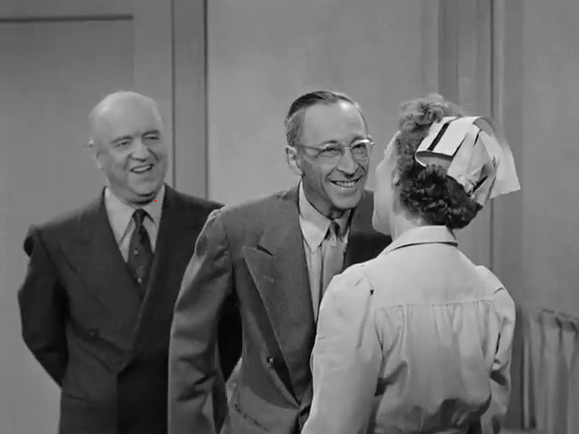
Charles Lane appeared in one the most viewed episodes of I Love Lucy ever, "Lucy Goes to the Hospital," where little Ricky is born. At the time it first aired, over 70% of the people who owned a television in America tuned in to see this episode. He played Mr Stanley, an expectant father in the waiting room with Desi Arnaz. While Desi is a nervous wreck, Lane is calm and collected, he already has six children, all girls. When the nurse comes in to tell him she has a surprise, Lane is excited to learn that his wife has finally given birth to a son, but his elation is short lived. His wife has not given birth to a son, but triplets, three more girls. "Nine girls," he laments in that distinctive growl of his. 

"Well, you can always plan on a girls' softball team," quips William Frawley (Fred Mertz). 

Charles Lane appeared in dozens and dozens of TV shows. The following are just the ones I remember watching either in first run or in syndication:
  • Perry Mason
  • The Untouchables
  • The Twilight Zone
  • Maverick
  • Mr. Ed
  • Dennis the Menace
  • The Many Loves of Dobie Gillis
  • The Andy Griffith Show
  • Get Smart
  • The Munsters
  • F Troop
  • The Man from U.N.C.L.E.
  • The Wild Wild West
  • Gomer Pyle: USMC
  • Green Acres
  • Petticoat Junction
  • The Flying Nun
  • The Beverly Hillbillies
  • Bewitched
  • The Odd Couple
  • The Rookies
  • Medical Center
  • Rhoda
  • Chico and the Man
  • Maude
  • Soap
  • Mork and Mindy
  • Lou Grant
  • Little House on the Prairie
  • Hunter
  • St. Elsewhere
  • L.A. Law

Charles Lane's final feature film was a romantic comedy, Date with an Angel. He played a pot-smoking priest. How cool is that? I would like to say that this was a great capper to a wonderful career, but I can't. No, Charles Lane is not bad in the film. He's perfect as his typical crabby self, but it's a completely missed opportunity to do something different with him. 

Making things worse, Date with an Angel is an absolutely horrible movie. As you watch it, you find yourself thinking, Is this the worst movie I've ever seen? And then you think, No, it can't be. I've seen a lot of bad movies in this lifetime. But then you can't think of anything worse than what you are watching right now. The big problem with Date with an Angel is that it take what might be funny situations and then does absolutely nothing with them, like setting up a joke and not saying the punchline. A guy walks into a bar with a duck on his head. And that's it. By the way, the duck says to the bartender, "Can you get this guy off my ass." 

*** Spoilers Ahead, but don't worry about it. Date with an Angel is not worth watching, even for Charles Lane smoking pot. ***

Sorry for the poor picture quality, but it was the best
I could do taking a picture of the TV with my phone,
and I knew you'd want to see Charles Lane toking.
In Date with an Angel, an angel collides with a satellite and crashes into the main character, Michael Knight's, swimming pool. The angel has a broken wing and doesn't speak English. She just makes high-pitched squeaks, sort of like Beaker on The Muppet Show, except not cute or funny like Beaker, just annoying. Thus, she can't tell Michael Knight why she is there, so he takes her to a Catholic Church to ask the priest what to do. He opens the wrong door to the Confessional, the one where the priest is sitting, and there is an 82-year-old Charles Lane, smoking a doobie. Now you would think that this would be awesome, Charles Lane smoking a joint, but no. As with the rest of the movie, it introduces a potentially funny situation and then does nothing with it. Does Charles Lane act stoned? No. Does he offer one of those unique insights that you only think of when you're high? No. He just acts annoyed, like you have seen him do a thousand times. Okay, about 350 times. First, Charles Lane is annoyed that Michael Knight opened the wrong door and then that he's not Catholic and doesn't know what Hail Marys are. Ultimately, Knight tries to show Charles Lane the angel, but Lane thinks it's a joke and threatens to call the police and tells Knight to go to the Baptist Church down the street. It's a typical Charles Lane performance and about the only thing that almost makes it worth watching. It just could've been so much more. 

I ended up watching the rest of Date with an Angel, in hopes that Charles Lane might show up in another scene. No such luck. I did learn one thing though. How do you know when a romantic comedy is not working, when you're hoping that Charles Lane will come back for another scene.


I want to end with something that speaks to Charles Lane's influence on movies, TV, and pop culture in general. The longest running animated TV show in U.S. history is The Simpsons. Over the years, over a hundred celebrities have appeared on the series, as themselves or in parodies of their work. Limiting myself to just classic film people, The Simpsons have featured the following:

  • James Stewart
  • Ernest Borgnine
  • Mickey Rooney
  • Elizabeth Taylor
  • Mel Brooks
  • Lauren Bacall
  • Humphrey Bogart
  • Claude Rains
  • Ingrid Bergman
  • Clark Gable
The blue-haired lawyer is a character first introduced as one Mr. Burns many lawyers in Season 2. In one of the DVD commentaries, animator Jim Reardon said that the character was designed to look like none other than Charles Lane. The blue haired lawyer has never been given a name. In one episode he worked for the legal firm of "Luvum & Burnham: Family Law," so possibly his name is either Luvum or Burnham. In another episode, he is revealed to be the author of a science fiction novel, The 60 Foot Baby, but on the book cover, he is credited as, Burns' Lawyer. The blue-haired lawyer has appeared in dozens of episodes without being given a name, a perfect tribute to Charles Lane.

Thursday, March 9, 2017

Carl and Rob Reiner to Appear at TCMFF

Yesterday, TCM announced that the father-son duo of Carl Reiner and Rob Reiner will appear at the TCM Classic Film Festival (TCMFF) and be honored with a hand and footprint ceremony at the TCL Chinese Theater in Hollywood. In addition, Carl Reiner will introduce his film, The Jerk (1979), and Rob Reiner will introduce, The Princess Bride (1987). 

This is great news for TCMFF attendees, though I have a feeling that it might make festival choices that much more difficult. I saw Carl Reiner last year at TCMFF, and he was a hoot, lots of great stories.  Still, I saw The Jerk in the theater, so that might make me lean toward something else. I have never seen Rob Reiner in person, but The Princess Bride is one of those films that seems to always be showing somewhere, even in the fairly small number of art theaters in San Diego.  I know I'll have another chance to see it somewhere before too long. But Rob Reiner, that's another story. 

I'm already starting to stress out about the inevitable heart-breaking choices I'll have to make once the schedule drops. 

Friday, January 22, 2016

Star–Director Blogathon: Billy Wilder and William Holden, a Match Made in— Well, Probably Not Heaven

This post is part of the CLASSIC SYMBIOTIC COLLABORATIONS: The Star–Director Blogathon


If you had asked me 20 years ago who my favorite director was, I would have said, Alfred Hitchcock without batting an eye. If you asked me now, I still might say, Alfred Hitchcock, but I'd really have to agonize over it. Now, if this post is supposed to be about Billy Wilder, why am I talking about Alfred Hitchcock?

Well, I love Alfred Hitchcock, but he is kind of a one trick pony. It's a really really good trick, and nobody else can do that trick as well as he could. Likely, no one ever will. The reason I now have to agonize over my favorite director is that Billy Wilder could do it all, and nowhere is that more evident than his collaboration with William Holden. In the early to mid-1950s, the pair made three films together, and they about as far apart from each other as films could possibly be:

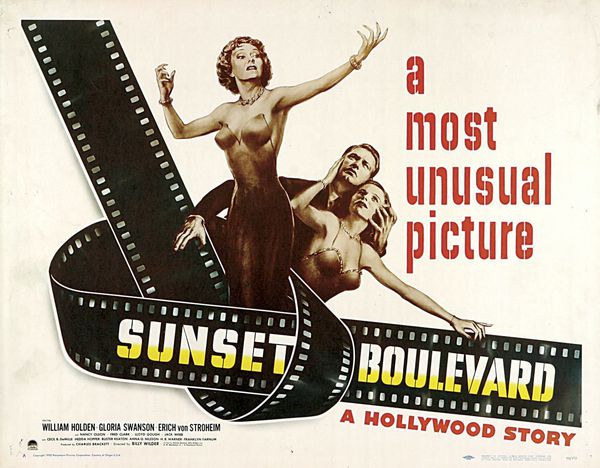
  • Sunset Blvd. (1950)
  • Stalag 17 (1953)
  • Sabrina (1954)
Two decades later, they teamed up again for, Fedora. The parallels between Sunset Blvd. and Fedora are obvious. If you haven't seen Fedora, it's not about a private eye. That's what the title suggested to me. It's about a movie star, Fedora, who retired and has been living in seclusion in Europe. Obviously, Fedora is two film greats way past their prime trying to recapture their glory days with a rehash of arguably their greatest film together. Or is it? I mean isn't William Holden's character basically the same person as in Sunset Blvd.

Well, except for that whole face-down-in-the-pool thing. Ooh, spoilers. Sorry. I'm going to assume that everyone has seen the first three films and not the last one. Probably, a fairly safe bet. With the exception of the face-down-in-the-pool comment above, I tend to avoid spoilers whenever possible. On Billy Wilder-William Holden pairings from the 1950s, there may be some minor spoilers. On Fedora, I'll do my best to have none.

Let's look at these films separately.

Sunset Blvd.


Like many of Billy Wilder's films, Sunset Blvd. is a bit hard to classify. IMDB calls it both Drama and Film Noir while Wikipedia refers to if as Black Comedy/Drama and Film Noir.  I think all of these work. Most of the comedy in the film stems from Norma Desmond (Gloria Swanson) saying very funny things that she doesn't realize are funny, or William Holden editorializing about the things she says or does. You feel like you are a bad person for laughing. So, yeah, Black Comedy works. At its heart, Sunset Blvd. is essentially a Tragedy. William Shakespeare couldn't have done better. So, Drama works as well. Film Noir, hmmm. Well, it doesn't have any hard-boiled private eyes. No back alleys or dark nightclubs, but where does most of the movie take place. A Beverly Hills mansion totally gone to seed. An architectural tribute to a bygone era. A mausoleum. How does the Holden voiceover describe the place. 

"The whole place seemed to have been stricken with a kind of creeping paralysis— Out of beat with the rest of the world, crumbling apart in slow motion."  

Sounds a bit Film Noir to me.  Oh yeah, then there's William Holden face down in the— Oops.

And what of the star? William Holden is a down-on-his-luck screenwriter. A former newspaper man who had come to Hollywood to write movies. With only a couple of B-pictures to his credit, he grinds out original stories, two a week, only to not have them sell. He's just an ordinary guy, trying make it in a very rough business. He's trying to avoid having to go back to his old job at the city desk of a Midwestern newspaper and admit to himself that he couldn't make it.

Leave it to Billy Wilder to take Film Noir, a genre that had barely been defined, and turn it on its ear. Look at the characters:

  • Joe Gillis (Holden), his only crime is wanting to make a living writing movies, unless you count missing a few car payments and trying to keep it from being repossessed
  • Norma Desmond (Swanson), delusional, unwilling to accept that the world has moved on
  • Max (Erich von Stroheim), out of love for Norma, he writes her fan mail, so that she can keep her illusions alive
  • Betty Schaefer (Nancy Olson), I like to think of her as an unjaded version of William Holden, before the Hollywood machine had beaten him. Of all the central characters, she's the one that comes through with the least scars. She only has to deal with losing William Holden and likely end up being married to Jack Webb.
None of them are bad people, they're all just twisted by forces beyond their control. If that's not Film Noir, I have no idea what is. There's a certain poetry to Sunset Blvd. from the first frame to the last. It's a masterpiece.

For the part of Joe Gillis, Marlon Brando, Fred MacMurray, and Montgomery Clift were also considered. Clift even signed to play the role and withdrew, claiming it was too close to the role he played in The Heiress. I think it might have worked with any of them. Fred MacMurray was possibly a bit old, only about 10 years younger than Swanson. I really think the age difference is a factor. Brando would have been mid-twenties, possibly a bit young. Montgomery Clift was only a couple of years younger than Holden, but I'm thinking he would have looked younger than Brando. Also, I always got an innocence and vulnerability from Clift. Joe Gillis is world weary and cynical. William Holden could do cynical like no one's business. I just don't see anyone being better in the role than William Holden. It was a signature role for him and his first nomination for an Academy Award.

Stalag 17

Here we have Billy Wilder's take on a War drama, but is about patriotism, comradery, or courage under fire? No, it's about greed and suspicion and betrayal. In a German prison of war camp, the men in a certain barracks always find that the Germans are one step ahead of them and suspect an informer in their midst. Suspicion falls on William Holden's character, Sgt. Sefton, because he always has some scheme going, selling cigarettes and holding gambling events, and using the profits to buy better food and treatment from the German guards. Like most Wilder films, it's a great story with a great cast of characters in roles both large and small, all executed with absolute precision. 

Stalag 17 was shot in sequence, in the same order as the final film. A rarity because it generally takes longer and is more expensive. Many of the actors didn't know about the final plot twist until they were about to shoot it. A former POW, William LaChasse, was hired in a bit part, and the production based much of the look of the camp on his recollections. Holden donned a crewcut and often went unshaven to downplay his looks and add to the gritty reality of the film.

Once again, William Holden was not the first choice for the role. Originally, Charlton Heston was considered. Then, Kirk Douglas was offered the role and turned it down, later saying it was the biggest mistake of his career. William Holden didn't want the part either. The film is based on a stage play. Holden walked out during the first act and later had to be coaxed into reading the screenplay. Still, he refused the role, but the studio bullied him into doing it. During production, William Holden was constantly trying to get Billy Wilder to make changes to the script to make his character more sympathetic. Wilder refused. 

The thing I love about William Holden is that he always have some sort of angle, making him perfect for that role of Sgt. Sefton, who knows all the angles. I really can't imagine anyone else in the role. Definitely, the character is unsympathetic, but Holden's natural charm keeps you on his side. And what did William Holden get out of it, only an oscar for Best Actor, beating out Burt Lancaster and Montgomery Clift in From Here to Eternity.


Sabrina


Sabrina with David (and William Holden)
Sabrina might be the weakest of the films being considered. Why? Because it's just a light comedy. It's fluff and doesn't have the edge that you'd expect out of a Billy Wilder comedy. Yet, the remake 40 years later had only a few minor tweaks to update it and works great. It's cute. It's funny. What more do you want from a comedy? There's a theme about differences in class, but nothing heavy handed. Originally, Cary Grant was cast to play the older Larrabee brother, Linus, and Humphrey Bogart was brought in as a last minute replacement. Personally, I think it works better with Bogart. I think it would be too easy for Audrey Hepburn to fall in love with Cary Grant. Having Bogart get the girl makes the story that much more touching for me.

I'm sure the role of the younger playboy brother, David, was not very demanding for William Holden. Then again, I can't imagine the roles being very demanding for anyone in the cast. When released several critics said they thought Holden would have been better playing Linus and a younger actor playing David. Again, I think you would have the same problem as with Cary Grant. Why wouldn't Audrey Hepburn fall in William Holden as the older brother. As it was, the casting was perfect. William Holden's charm and easy good looks are the perfect counterpoint to Bogart's craggy awkwardness. Only Billy Wilder could have Humphrey Bogart get the girl over William Holden and make it work.

Much of what you see online about the film involves Audrey Hepburn's clothes. I don't think that Sabrina was much more than a blip on the radar for either Billy Wilder or William Holden, but what a wonderful blip. If this is one of their lesser films for both Wilder and Holden, I only wish they had made 10 more each that were just as good.

Fedora


Fedora couldn't be more of a perfect bookend to the Billy Wilder-William Holden relationship if it tried. I hadn't seen it until about a week ago. I've been working my way through the later Billy Wilder films for the last couple of months. I'm only missing a couple of them (Avanti and Buddy Buddy). I have to say it's easily my favorite of the later Billy Wilder films. 

William Holden plays Dutch Detweiler, a down-on-his-luck film producer, trying to coax classic film star, Fedora, out of retirement. When Holden finds her living in seclusion on a small island in Greece, something is wrong. Fedora appears to be being held prisoner by her doctor (José Ferrer) and her benefactor, the Countess Sobryanski (Hildegard Knef). I honestly don't think I can go into much more detail on the plot without spoiling things. 

Fedora only saw limited release, prompting Billy Wilder to complain that the studio spent about $625 on marketing. Admittedly, Fedora is not a perfect film. I have a feeling that 1970s audiences found the voice-overs and flashback within a flashback structure old-fashioned and offputting. I was fine with it, but then again I watch a lot of old movies. My biggest problem was that it seem overly melodramatic. Billy Wilder had wanted Marlene Dietrich to play the role of Fedora, and Faye Dunaway as her daughter Antonia. I think that stronger casting of the female characters might have turned this flawed but interesting film into a truly great film. That wasn't meant to be. Dietrich apparently hated the book and thought the screenplay did little to improve it. It's not clear to me whether Faye Dunaway was seriously considered beyond Billy Wilder wanting her.

For William Holden, it was a good solid performance. Maybe not Network, but still.... So is Fedora a couple of has-beens clutching at straws? No, not really. Sure, no one is ever going to say it's a better film than Sunset Blvd., but it does have something to say Hollywood and the cost of fame. And that something is not the same thing that Sunset Blvd. says. In fact, it deals with something that Sunset Blvd. only hints at, the double standard in Hollywood with regard to male and female actors. Male actors are allowed to age gracefully. Female actors, not so much.

Thanks to Billy Wilder's skill, you buy Humphrey Bogart in Sabrina getting a girl far too young for him over the more or less age-appropriate and better looking. William Holden. Theresa Wright and Ida Lupino were both born the same year as William Holden. The year that Holden was nominated for Best Actor in Network. Theresa Wright did a made-for-TV called Flood, and appeared in a TV series called The Wide World of Mystery, in an episode titled "Terror in the Night." That same year, Ida Lupino made a film called Food of the Gods (about giant wasps). The fictitious Fedora, she did what many older actresses do when they don't want to co-star opposite giant insects. She tries to fade into the background and let her public remember her as she was. If you haven't seen Fedora, hint, it doesn't work out for her. 

Check out other posts in the CLASSIC SYMBIOTIC COLLABORATIONS: The Star–Director Blogathon


Tuesday, November 24, 2015

The Railrodder – Buster Keaton’s Last Silent Film from 1965, Wait, What?

I stumbled on the The Railrodder when I was looking at the IMDB page for Buster Keaton. The film was released in 1965 and made in conjunction with the documentary, Buster Keaton Rides Again. Both were produced by the National Film Board of Canada. Buster Keaton Rides Again is a making of film about the production of The Railrodder, though it is twice the length of The Railrodder. Buster Keaton Rides Again is as much a documentary about Keaton’s life as it is a making of.

In The Railrodder, Buster Keaton is a in London reading a newspaper. He sees an ad that says, SEE CANADA NOW! He throws away the paper and jumps off a bridge into the Thames. The next shot he is emerging on a beach in Nova Scotia.  After seeing a sign pointing West and saying Pacific Ocean 3982 ½ miles, he starts to walk along the railroad tracks. He comes on a speeder, an open one seat railroad maintenance vehicle. The seat looks comfy, so he decides to take a nap and accidentally puts it in gear. Off he goes. The rest of the film is a series of gags, following him across the continent.

The Railrodder is definitely a silent film. There isn’t a single word of dialog, only music and overdubbed sound effects. The speeder in addition to having an inexhaustible fuel supply also has a Tardis-like storage cabinet. A running gag throughout the film is him pulling everything from his signature pork-pie hat to a tea set to a blanket and pillow from the tiny cabinet. Keaton celebrated his 69th birthday during the filming. While he is not falling off any buildings, he is clearly doing his own stunts, I presume with the exception of the jumping off the bridge. He certainly had not lost his feel for physical comedy.

The Railrodder is credited as, Written and Directed by Gerald Potterton. Watching the documentary, Buster Keaton Rides Again, it’s clear that he wrote/improvised most of the gags and surely co-directed with Potterton. I honestly don’t think he cared about the writing/director credits. The documentary clearly shows how he worked. The Railrodder is a wonderful short film.

I have embedded The Railrodder below:


Both the The Railrodder and Buster Keaton Rides Again are available for streaming free from National Film Board of Canada’s YouTube page at the links below:


Monday, November 23, 2015

When you have to shoot, shoot, don't talk – What a Character Blogathon: Eli Wallach

Eli Wallach was born on December 7, 1915 in Redhook, Brooklyn, New York to the only Jewish family in an otherwise Italian neighborhood. Oddly, the root word his surname comes from, Wlochy, is the Polish word for Italy. He attended the University of Texas in Austin. Though the university didn't have a Dramatic Arts department, he performed in many plays in the student drama club. In one play, he performed with both Ann Sheridan and Walter Cronkite, the latter of whom he remained friends with for over 70 years.

After being drafted into the Army in WWII, he served in the Army Medical Corps and achieved the rank of Captain. After the War, he became a founding member of the Actors Studio, and he studied with Marlon Brando, Montgomery Clift, Sidney Lumet, Marilyn Monroe, and the woman he would soon marry, Anne Jackson. He and Jackson remained married until his death in 2014. Wallach made his Broadway debut in 1945 and won a Tony Award in 1951 for his role in the Tennessee Williams play The Rose Tattoo with Maureen Stapleton. Through the 1940s and into the 1950s, he worked in both theater and television.


Wallach made his film debut in the 1956 Elia Kazan film, Baby Doll, with Karl Malden and Carroll Baker. The film was nominated for four Academy Awards and four British Academy of Film and Television Arts (BAFTA) Awards. Wallach won the BAFTA Most Promising Newcomer Award for Baby Doll. He is probably best remembered for his roles of Calvera in The Magnificent Seven (1960) and Tuco in The Good, the Bad and the Ugly (1966). After starting in films, he continued to do theater in between film and television roles. 

Wallach was one of three actors to play the supervillain, Mr. Freeze, in the 1960s Batman TV show. He was in very good company. The other two were George Sanders and Otto Preminger. He said that he received more fan mail for Mr. Freeze than any other role he ever played. He continued to work in both film and television well into his 90s. Later in life, he had roles in the numerous films including Mystic River and The Godfather: Part III and TV series including Murder She Wrote, L.A. Law, Law and Order, and Nurse Jackie.

I'm going to look at a total of four roles, my two favorites from his prime and two from later in his career. 


The Magnificent Seven was a remake of the 1954 Akira Kurosawa film, The Seven Samurai. Eli Wallach plays the outlaw, Calvera, whose gang terrorizes a small Mexican village. When approached to do the film, Wallach wasn't impressed. In The Seven Samurai, the head bandit was just a guy with an eye patch on a horse, he thought. Director John Sturges told him to read the script. Wallach did and realized that even though after the first scene, his character doesn't appear for another 35 minutes, that whole time the movie revolved around the character. 

The film opens with Calvera and his men robbing a meager Mexican village of food and supplies. Through all of this, Wallach talks to the villagers and somehow manages to sound magnanimous. Not that he is, but he makes you think he really believes he is being magnanimous. It adds dimension to what otherwise be just be a ruthless character. Every scene that he is in, Wallach is riveting. Some of the best lines in the film are his, and he just nails them. He has said in interviews that he chose certain items for the character, like the gold teeth and red silk shirt. He wanted to show what a man like Calvera would spend the money he stole on. It turns out that Wallach's gang in the film, played by Mexican actors more or less adopted Wallach, taking charge of his horse and gun, and not letting the crew give them to him unless they checked them first. Wallach said that he was so impressed with the Elmer Berstein score, that if he heard it while making the film he would have ridden his horse better.


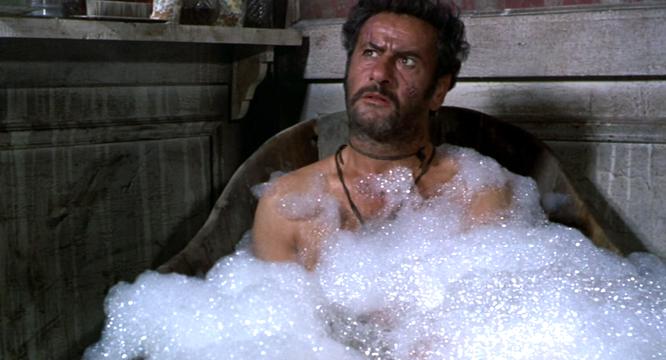
In The Good the Bad and the Ugly, Wallach plays Tuco, "the Ugly" from the film's title. In a film like The Good the Bad and the Ugly, it's almost hard to say who the good guy is. Obviously, it's Clint Eastwood, but he is so far into anti-hero territory that he is very little different from the "bad guys." Wallach's Tuco is an utterly reprehensible character. He is vicious, cruel, and cowardly. Yet through all of that Wallach manages to make the character likable and has you pulling for him.  In the scene in the gun store, all of Wallach's actions were unscripted. He knew so little about guns that he was instructed to do whatever he wanted. I just rewatched it last week, and the scene was brilliant. In the film, Wallach's character wore his gun on a lanyard around his neck and then tucked it into his belt rather than using a holster. This was Sergio Leone's idea, because Wallach said he had trouble putting his gun back in the holster without looking at it, something that drove John Sturges crazy on The Magnificent Seven.

When Wallach first arrived in Madrid for fliming The Good the Bad and the Ugly, all of the hotels were full. Clint Eastwood invited him to stay with friends he was staying with. The two of them ended up sharing the same bed. Later Wallach's wife Anne Jackson told him that he could tell everyone that he was the only man to ever sleep with Clint Eastwood. During the filming, Wallach barely spoke any Italian, and director Sergio Leone barely spoke any English, so they spoke to each other in French. Still, they had similar senses of humor and got along well, and the end product speaks for itself.

In Tough Guys (1886), Wallach plays Leon B. Little, an aging hitman, who had been hired to kill Burt Lancaster and Kirk Douglas and has waited 30 years while they were in prison. I love Tough Guys, but I'll be the first to admit that almost 30 years later, it looks very very dated. Still, it's worth a watch if only to see Lancaster and Douglas on screen for the last time together. But another reason is to see Wallach, a senior citizen hit man who can barely see, presumably from cataracts. Most of the humor surrounding his character involves him losing his glasses and not being able to see well enough to find them, making him pretty ineffectual as a hit man. Still, he's great in the role and a huge asset to the film. He plays it straight. He plays it well, and that makes it all the more funny. 

Wallach: I wanna get a hundred of those coppers.
Burt Lancaster: There's only fifty Leon.
Wallach: So? I'll shoot 'em all twice!


Really?!?
Finally, I watched Wallach in Murder She Wrote of all things, from an episode called "A Very Good Year for Murder" from the fourth season. I chose this mostly because it was available on Netflix. It was the first episode of Murder She Wrote I have ever seen all the way through. My wife came in and said, "What the hell."

"It has Eli Wallach in it," I said.

"Oh, that makes sense."

In addition to Wallach and Angela Landsbury (duh), the episode also had John Saxon, Billy Zane, and Grant Goodeve. All in all, it was good. A big part of that was Eli Wallach as Savatore Gambini, the patriarch of a well-to-do wine raising family in the Napa Valley. He was great. I'm probably not going to be watching a whole lot of the series, but still it was well worth watching this one episode. I think that is the sign of really great actor, he makes whatever he's in that much better. Old or young, that's what Eli Wallach did.


#####

This post is part of the fourth annual What A Character Blogathon, hosted by:


See their sites for more posts in the series.